
I have settled into a daily rhythm of watering my vegetable beds each morning.
There is a system.
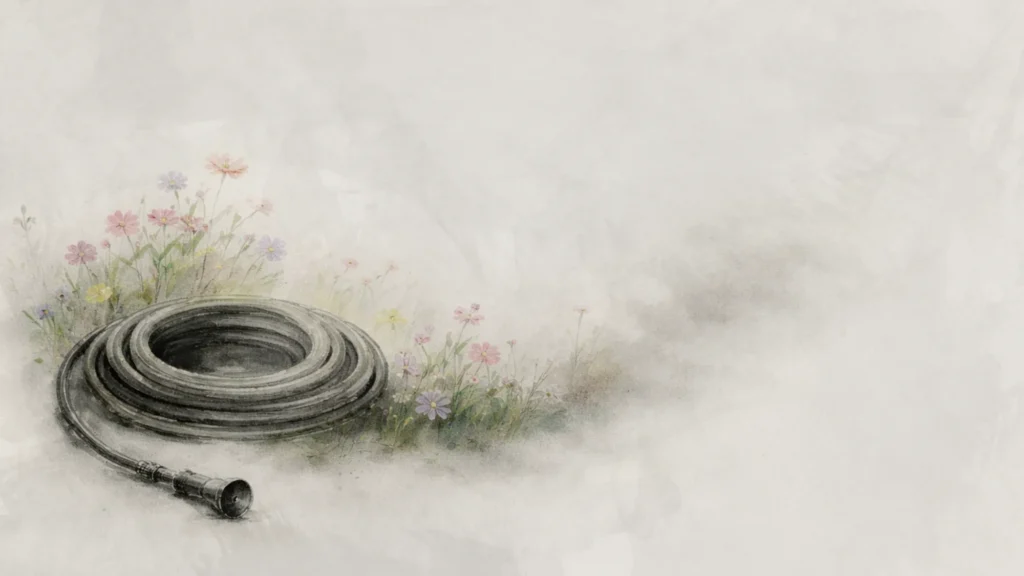
I use a 100-foot hose.
Sixty percent stays coiled near the tap outside.
Forty percent is kept inside the vegetable enclosure.
I never touch the outside coil.
Inside, a separate hose and spray gun are neatly rolled in a gunny bag.
I use only that, and when I am done, I roll it back and return it to its place.
Today, the water pressure dropped.
I asked my mother to check the tap outside.
A few moments later, the pressure returned.
I finished watering and walked away.
Then I saw it.
The outside hose had been pulled loose, uncoiled, and left sprawled on the ground.
A sharp pang of anger rose in me.
I shouted, “Why is everything so messy?”
She stood there smiling,
saying she never touches my things,
offering explanations,
repeating, “I didn’t do anything,” in the same calm tone each time.
I grew more furious.
As words were exchanged, something caught my attention.
My voice was harsh and loud.
My eyes were wide.
My nostrils flared.
The anger itself had already begun to fade,
but I paused, watching.
What did this order represent to me?
Safety?
“The hose kept this way will last longer.”
Competence?
“I do things properly.”
Worth?
“Order reflects who I am.”
Had my mother threatened what I take myself to be?
Why did the anger keep growing,
especially when she justified her actions?
Did I hear justification as
denial of my experience?
Invalidation of my standards?
Loss of control over my space?
“You messed up my life,
and now you are telling me I should not be upset.”
Did my mother create the problem?
Or was it my psychological attachment
to an image of order?
Watching closely, the movement of the mind revealed itself.
An idea of how things should be.
Identification with that idea.
And the disturbance when reality did not match it.