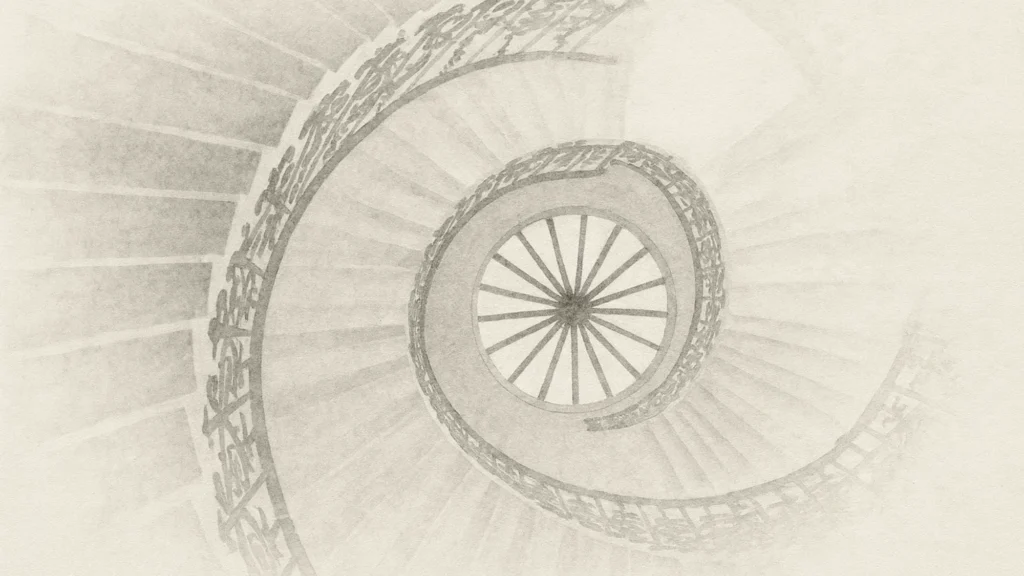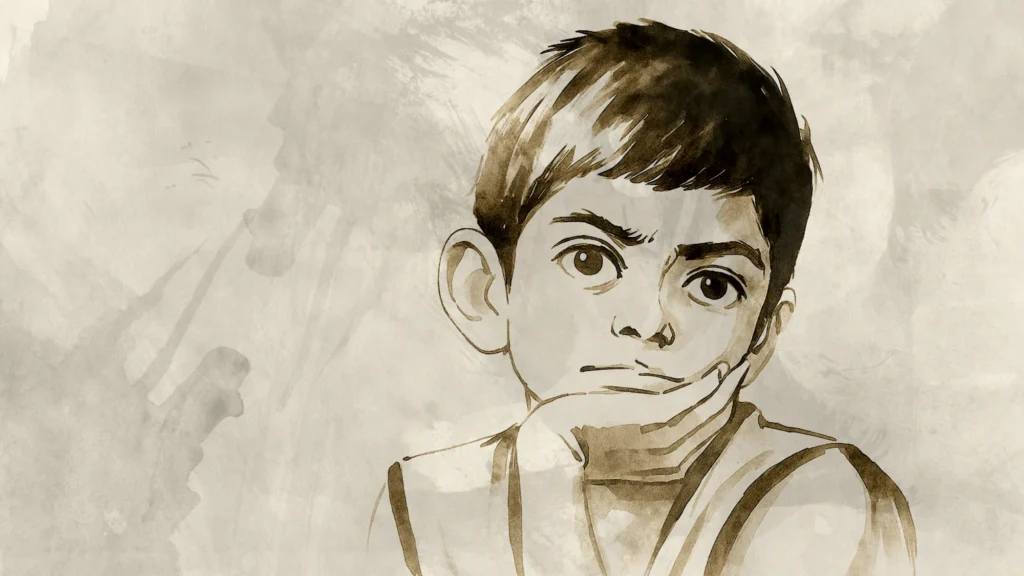

Grew up hearing stories.
Of living.
Of goodness.
Of symbols hidden inside ordinary things.
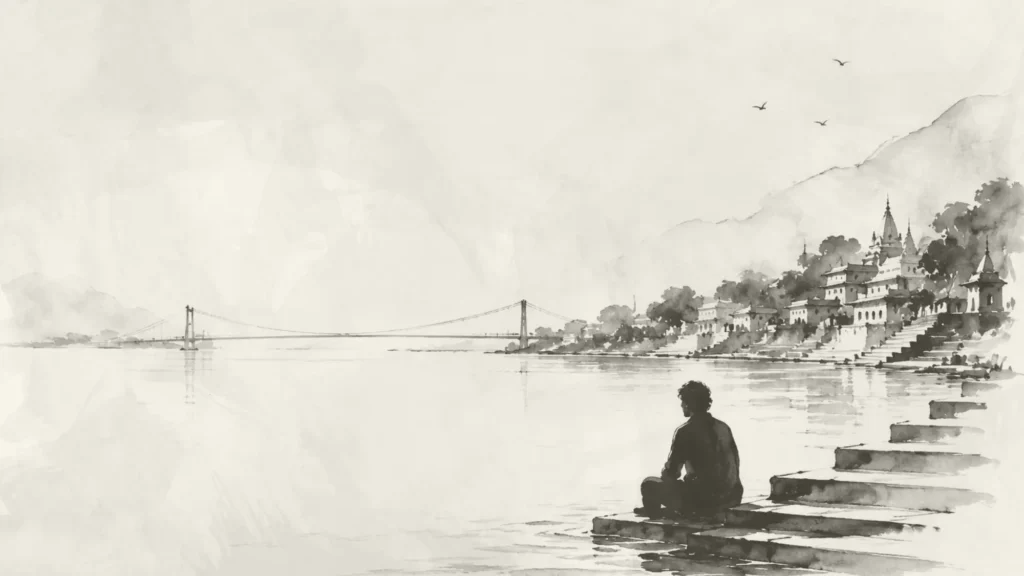
Ganga was never just a river.
She was an emotion.
Then I visited Rishikesh.
And I cried alone.
Not out of sadness.
Something simply broke open.
A kind of catharsis.
And then a question arose:
Is Ganga a river,
or an emotion?
Is she a symbol of flow,
of impermanence?
A symbol of purification,
of inner cleansing?
Perhaps humility is what remains
before something so vast.
And what is an emotion anyway?
Is it the mind saying:
“This matters.”
Refusing to see the ordinary
as merely ordinary?
Why else would a river make someone cry,
or a song stay with us for years?
Perhaps that is how reverence works.
A symbol gathers meaning.
Meaning gathers attention.
And in complete attention,
thought briefly falls quiet.
Along with the self.
But then another question arose:
If we stop giving things meaning,
does the emotion remain?
If nobody had told stories about Ganga,
would I still have cried?
And perhaps that is what the river
has been saying all along.
Not to cling.
Not to conclude.
Not even to seek meaning.
Just flow.
Further Reading
If this felt familiar, you may have noticed how quickly the mind adds meaning where there is none.
That movement — filling gaps, assuming intent, turning simple moments into stories — is explored further here:
- The Architecture of the Mind: Mental Tools
A closer look at how the mind uses comparison, labeling, and simulation to construct its version of reality. - The Two Worlds — One Keeps You Trapped
The difference between what is actually happening and the inner world we continuously create.
Seeing this clearly is where things begin to change.